Route planning and on-route navigation: Arcoda’s latest solutions at Ecomondo 2026
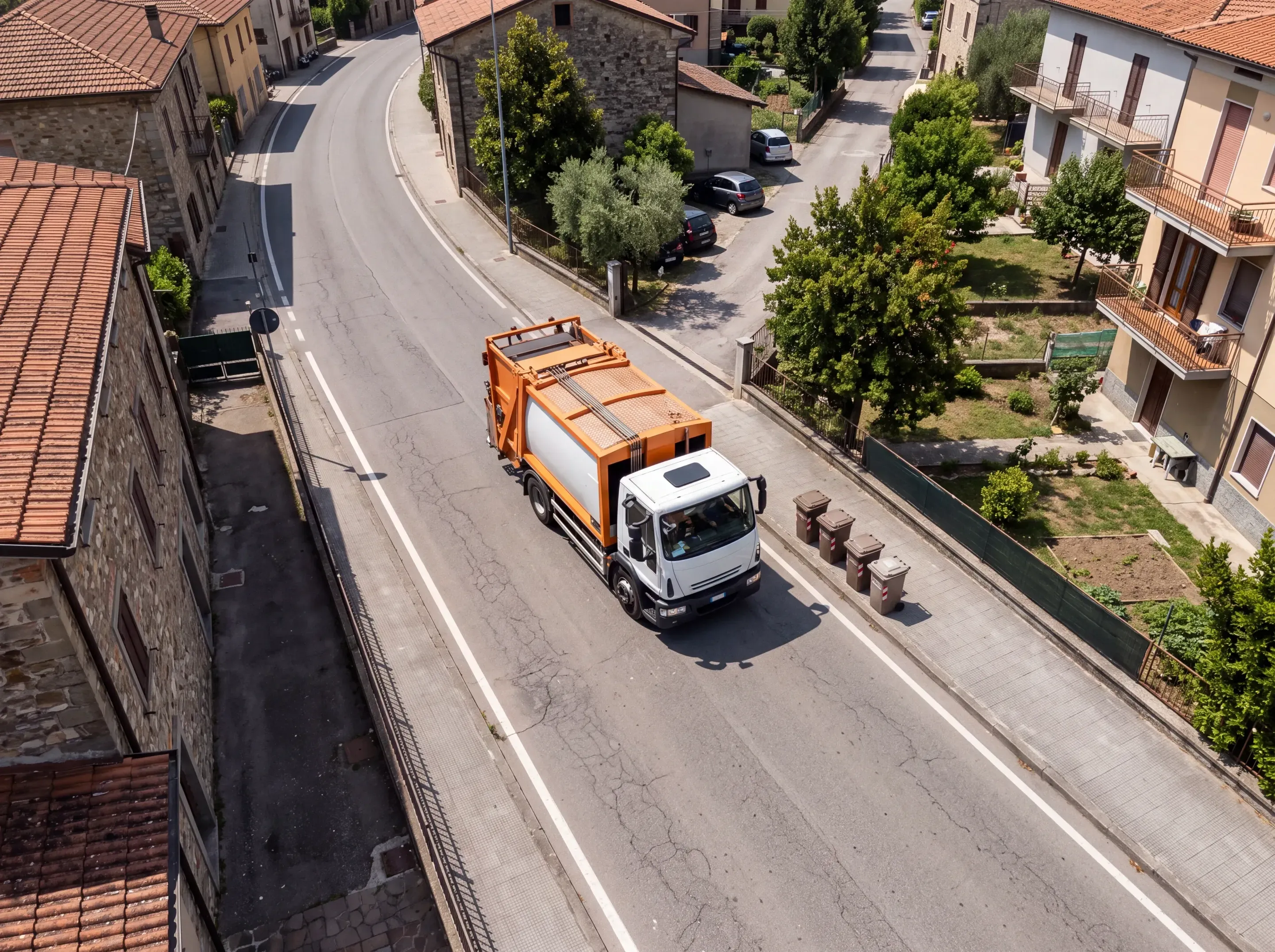
From 3 to 6 November, we will be at Ecomondo 2026 in Rimini to present our new solutions for managing waste collection and street sweeping services.
The developments we will showcase address two closely connected stages: route planning and route execution in the field. Our aim is to provide service operators with tools that connect what is organised in the office with what happens during the service, including when road conditions change or the round requires operational adjustments.
Planning routes using different sources
Service planning can draw on information that is already available or on activities recorded directly in the field.
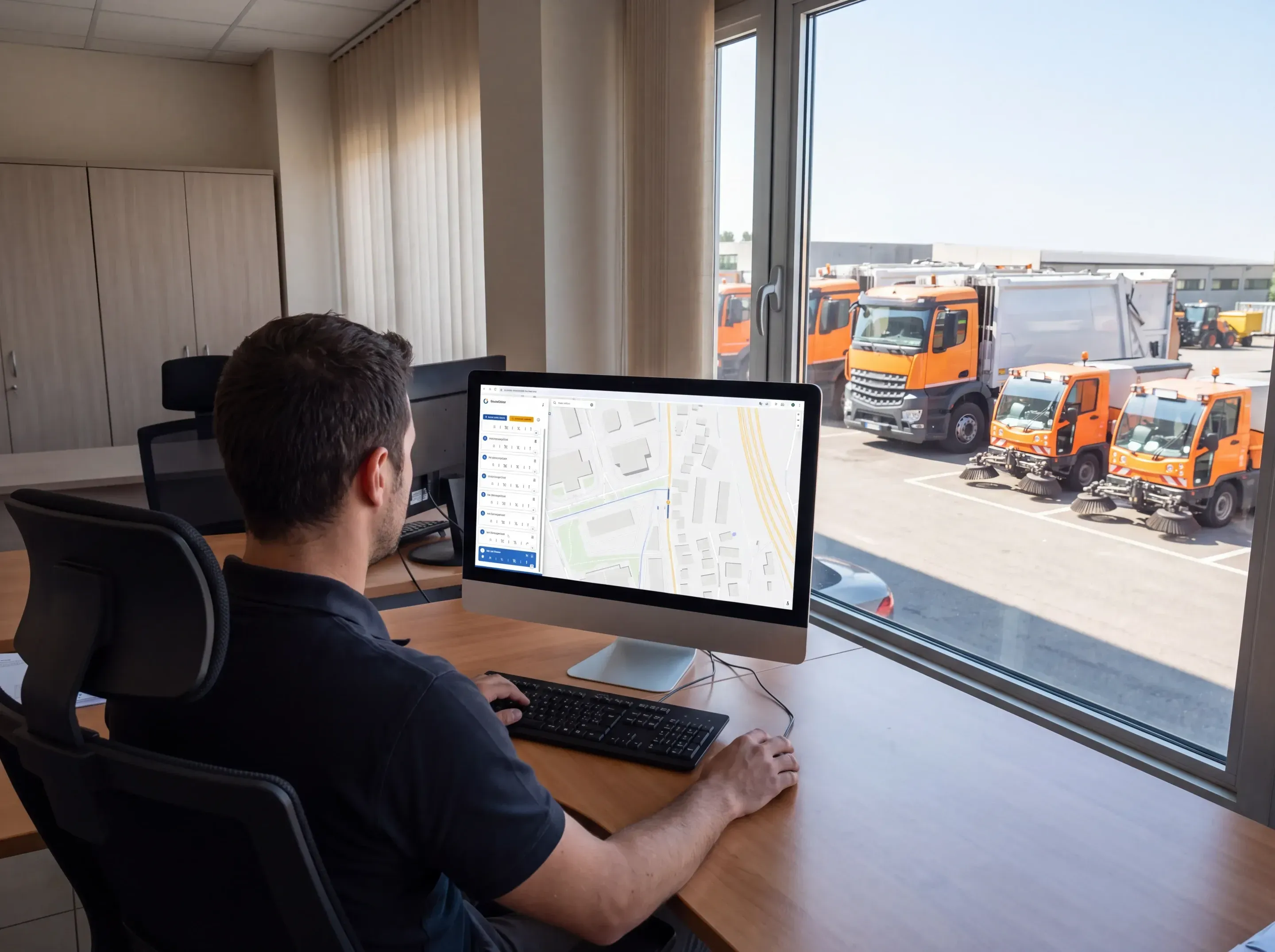
Our solutions make it possible to create, draw, edit and validate routes using maps, GPS tracks, geospatial files, artificial intelligence systems or recordings made in the field by a collection vehicle.
This makes it possible to make effective use of data from different sources and build a shared operational basis for organising services.
Adapting routes to changes in the road network
The road network is not static. New traffic directions, access restrictions, closures or changes to road geometry can affect routes that have already been planned.
That is why the developments we will present at Ecomondo include a new tool for updating the road network directly on the map, by editing its sections, attributes and geometry.
Every change is tracked and checked before it is saved. Routes affected by the changes are automatically identified and flagged to the back office, making it possible to adapt rounds quickly to local changes and keep planning aligned with actual road conditions.
Supporting the driver throughout the round
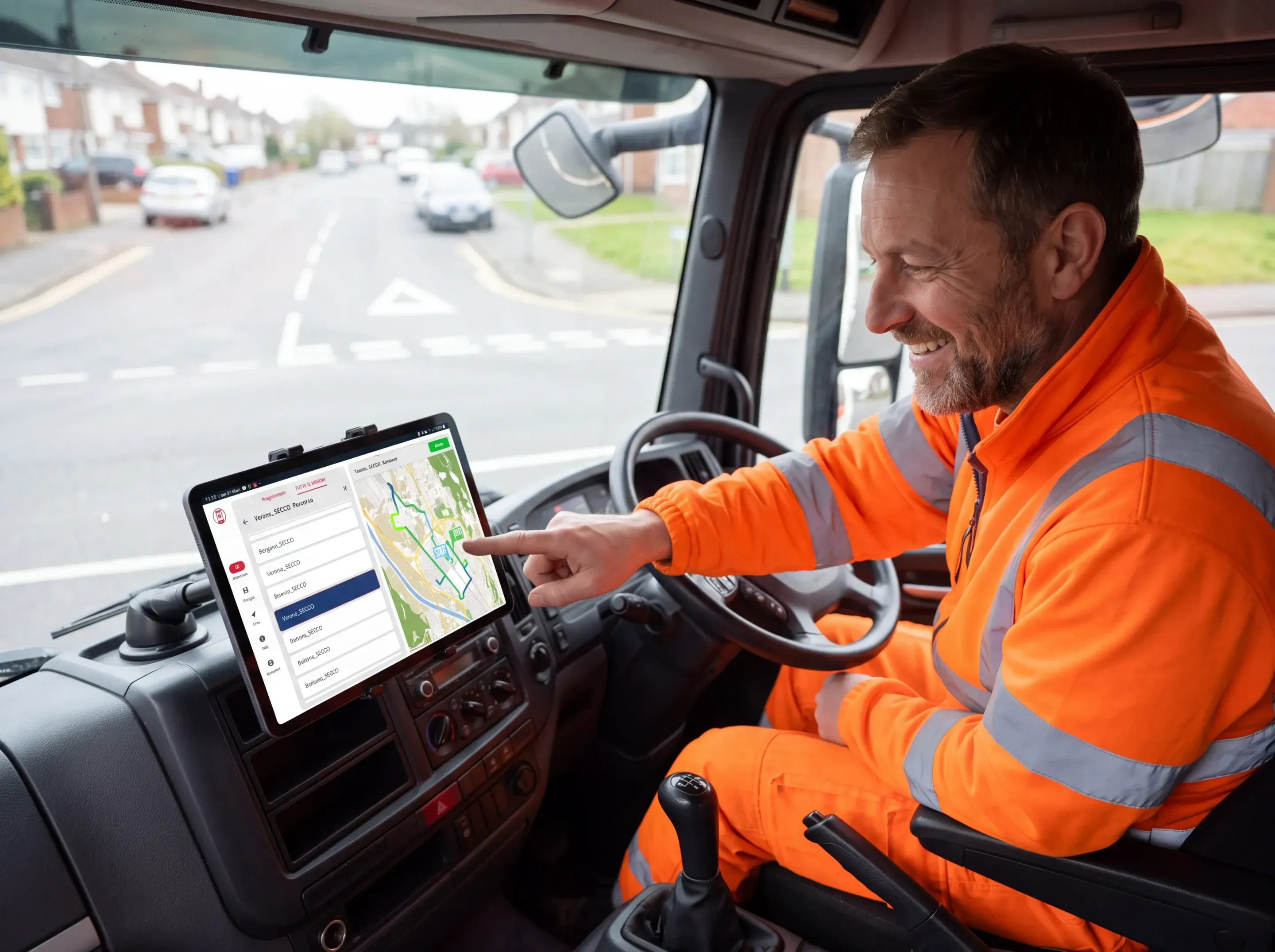
Once a route has been assigned, the solution assists the driver throughout the collection or sweeping round, providing the driving directions and operational information needed to carry out the service.
The route can be assigned automatically or selected manually from a list. The operator is then guided through the planned sequence. Dedicated progress indicators on the in-vehicle navigation device show the status of ongoing activities in real time, distinguishing between work already completed and work still to be done.
This makes service delivery less dependent on each driver’s knowledge of the area, also making it easier for new operators to start working on the routes.
Managing diversions and interruptions without losing the route
During the service, it may be necessary to interrupt the round temporarily to reach a roll-off container or another destination. Changes in road conditions may also prevent the driver from continuing along the planned route.
In these situations, the solution provides dedicated modes to help the driver interrupt the assigned route and subsequently resume the round. If the vehicle leaves the route, directions to the most suitable point for resuming the service are automatically recalculated.
The diversion is therefore managed as part of the operational process, maintaining the connection with the route originally planned.
Keeping the driver and control centre aligned
Service management requires timely information exchange between people working in the field and those coordinating activities from the office.
Integrated messaging, accessible to the driver only when the vehicle is stationary, enables two-way communication with the control centre. The back office can send instructions and map links to new destinations, while drivers can send updates, requests and reports.